
Thoughtful Office Design That Supports Client Experience
Updated: Mar 16
For growing firms, thoughtful office design is not about making a statement. It is about creating environments that support focus, discretion, and long‑term use as the business evolves. When designed with intention, the workplace becomes a strategic environment that shapes performance and quietly influences how the firm is experienced by clients.

At this level, the workplace is expected to function beyond efficiency.
It must hold complex conversations with ease, support extended periods of concentration, and convey confidence without overt signals.
The most effective office environments do this by balancing commercial rigor with a calibrated residential sensibility.
Spaces feel composed, intentional, and settled rather than styled.
1. Design as an Extension of How the Firm Operates
A well‑planned workplace reflects how a firm operates day to day.
Thoughtful office design considers circulation, acoustics, material performance,
and how different work modes coexist within the same footprint.
Well considered office environments reflect how a firm thinks and works.
Circulation patterns are deliberate.

Transitions between public and private areas are clear.
Spaces support both collaboration and discretion without calling attention to themselves.

Rather than relying on visual impact, these environments are shaped by proportion, light, acoustics, and material continuity.
The result is a space that feels intuitive to move through and easy to inhabit.
Clients are able to focus on the conversation at hand.
Teams are supported throughout long days without fatigue.

This approach reflects how SRCD works with organizations at a strategic level.

2. Sensory Experience and Client Perception
When done well, thoughtful office design shapes how clients and teams perceive the space: through light, proportion, texture, and a sense of calm that reinforces trust and professionalism.
Clients may not consciously analyze an office environment,
but they register it immediately.
The quality of light, the acoustics of a meeting room, the feel of materials at hand,
and the sense of calm or tension in a space
all contribute to perception.
Spaces designed with sensory awareness reduce friction.
Sound is absorbed rather than amplified.
Lighting supports focus without glare.
Materials feel considered and grounded.
These elements work together to create an atmosphere that feels steady and trustworthy.
When an environment is composed in this way, it recedes.
Attention remains on the people and the work rather than the space itself.

How does your office shape a client’s first impression?
0%Reinforces trust
0%Feels adequate
0%Inconsistent
0%Outdated
You can vote for more than one answer.
3. Where Quality and Timelessness Matter Most
In practice, thoughtful office design prioritizes durability and timelessness where it matters most, selecting materials that age well and perform under daily use rather than chasing short‑term trends.
Material decisions are critical, but they are not applied evenly. Investment is concentrated where it carries the greatest impact.
Primary touchpoints such as reception areas, conference rooms, and frequently used work surfaces warrant higher levels of quality and durability.
These are the areas experienced at close range and over extended periods of time.
Materials must age quietly, perform consistently, and maintain their integrity as the organization evolves.
Timelessness is not treated as an aesthetic preference.
It is a strategic choice that reduces the need for constant updates and protects the long term value of the environment.
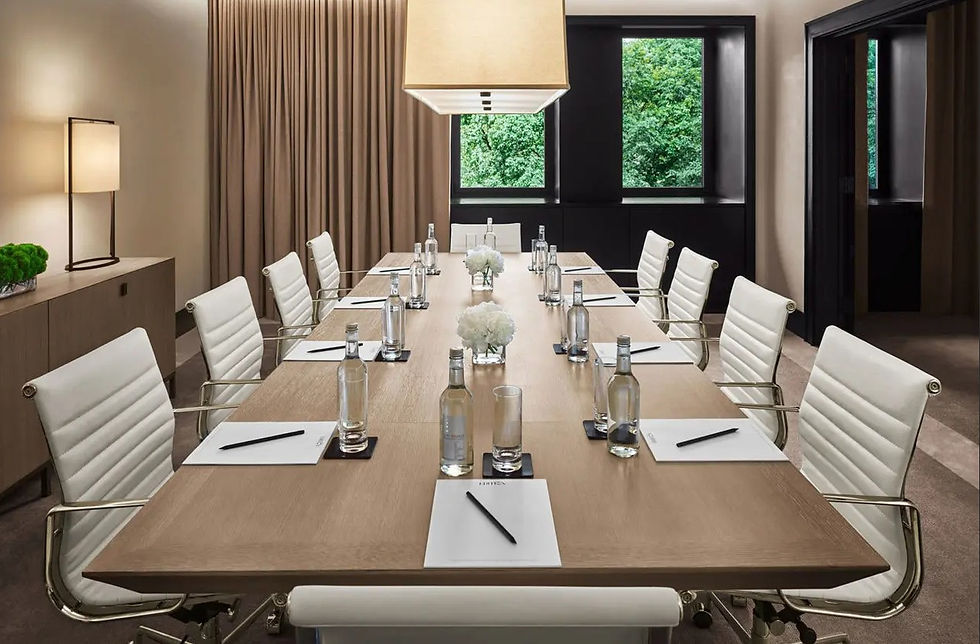

Material decisions are evaluated through performance, longevity, and perception.
Learn more about our advisory-led approach
4. Where Restraint Is Equally Important
Equally important is knowing where not to overspend.
Not every element in an office carries the same perceptual or functional weight.
Over investment in areas that are rarely engaged or subject to frequent change often adds cost without improving experience or performance.
In well considered environments, secondary spaces are resolved competently and calmly.
Systems likely to change are designed with flexibility in mind.
Resources are focused where they meaningfully support daily work and client interaction.
Restraint is not about reducing quality. It is about allocating it intelligently.


5. A Residential Sensibility Within a Commercial Framework
The most effective offices for client facing organizations often draw from residential principles without becoming informal.
Comfort is considered.
Scale is human.
Materials are tactile rather than glossy.
This sensibility supports longer stays, easier conversations, and a sense of ease without undermining professionalism.
It allows commercial spaces to feel settled rather than transactional.
The balance is subtle and intentional. Nothing feels decorative. Everything feels purposeful.
6. Designed for Continuity
These environments are not trend driven. They are designed to remain effective over time, supporting growth, leadership changes, and evolving operational needs without requiring reinvention.
Stability is the objective. Visibility is not.
Ultimately, thoughtful office design becomes a quiet asset, supporting growth, efficiency, and credibility without drawing attention to itself.
At Shelly Rose Consulting & Design, office design is approached as a strategic tool that quietly supports how firms work, how clients engage,
and how organizations evolve.
The most successful spaces do not announce themselves.
They allow the work to speak clearly.
7. Our Role
SRCD operates as a strategic partner, collaborating with leadership teams, real estate advisors, design build firms, architects, and project stakeholders to deliver office environments that quietly support the work being done inside them.
We don’t design for attention.
We design for clarity.
For firms evaluating whether their current environment is supporting future growth, an informed starting point matters.
Contact Shelly Rose Consulting and Design to discuss an office environment evaluation
8. A Measured First Step
Before change, clarity matters.
If you’re questioning whether your current office environment is supporting how your team works, how clients experience your firm, or how the space will perform as you grow, SRCD offers a strategic evaluation of existing workplace conditions.
This assessment considers spatial flow, client perception, material performance, and long-term adaptability, identifying where refinement is needed and where restraint is equally important.
Designing environments that reflect enduring success,
inspire confidence, and foster trust

Contact Us:
Direct: (786) 505-8232

Comments